
01 / Let’s start with your concerns

What is troubling
you now?

Joint pain, clicking or tense muscles? Answer three questions to find out what to discuss with a gnathologist at White Art in Moscow.

3 questionsNo phone number required

Your result appears immediately. Answers are neither stored nor sent anywhere.

Meet the doctors ↗
Question 1 of 3Your symptoms
What brought you to this page?

Choose what troubles you most.

This quiz helps you prepare for a consultation. A doctor makes the diagnosis after an examination.

02 / What is a gnathologist?

Joints. Muscles. Teeth.
Everything is connected.

A gnathologist is a dentist who studies how the temporomandibular joints, chewing muscles and tooth contacts work together.

When there is pain, muscle fatigue or limited mouth opening, we need to find the source of the symptoms. Before restoring teeth, we consider how their future shape will work with the entire system.

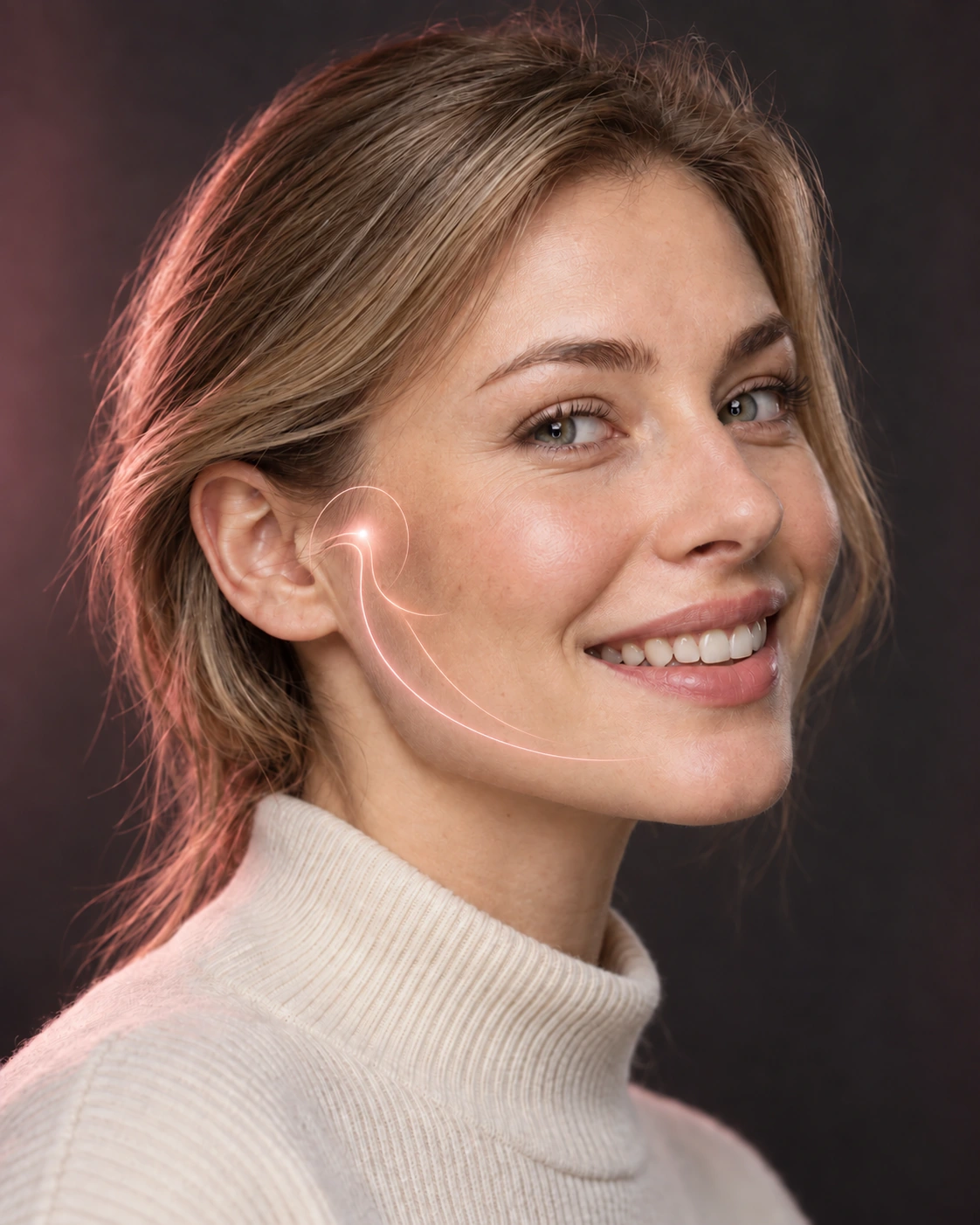
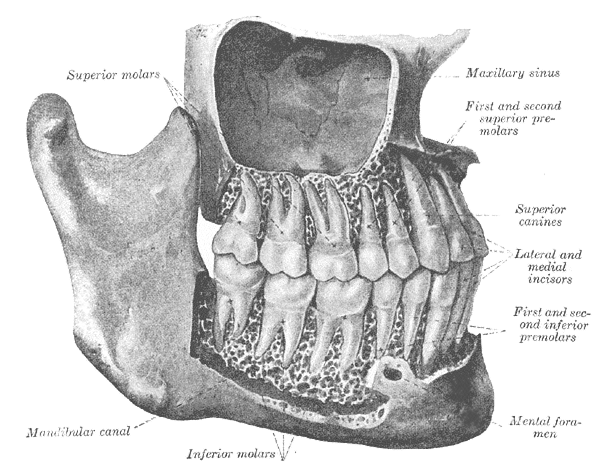
Illustration: temporomandibular joint area
01 / JOINTSFreedom of movement
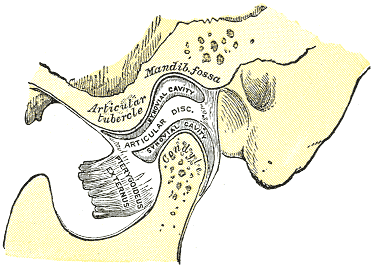
Historical anatomical illustration of the TMJ in sagittal section, showing the joint disc, mandibular head and joint fossa.
Inside the joint

The joint disc lies between the head of the lower jaw and the joint surface of the temporal bone.

Gray’s Anatomy · 311 ↗

Choose what you would like to explore

Allow the jaw to move

The TMJs are on either side in front of the ears. They combine rotation and sliding, allowing us to open our mouths, speak, chew and yawn.

At your appointment: we assess tenderness, clicking and freedom of movement. Pain near the ear alone does not indicate a joint disorder.

Produce movement and force

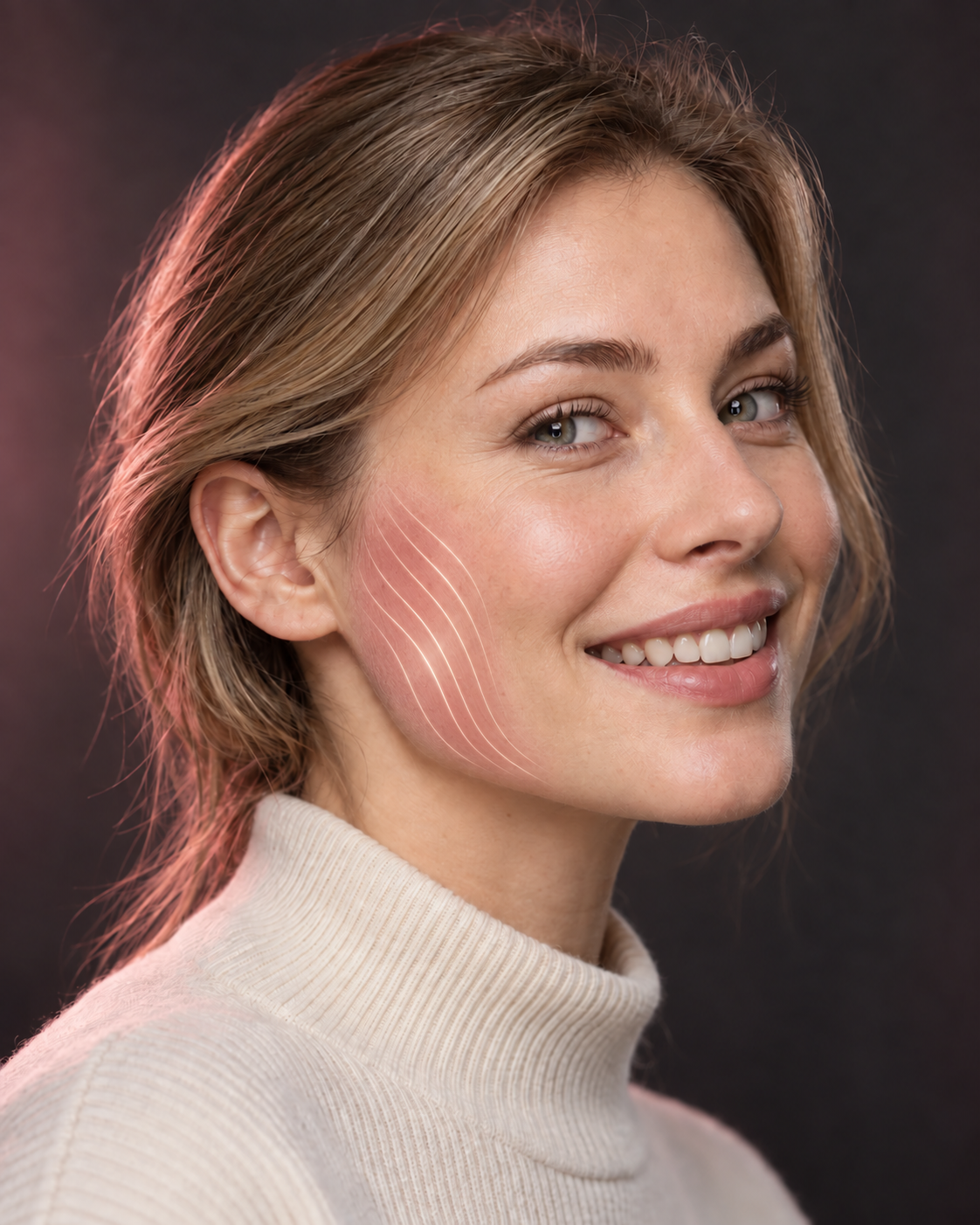
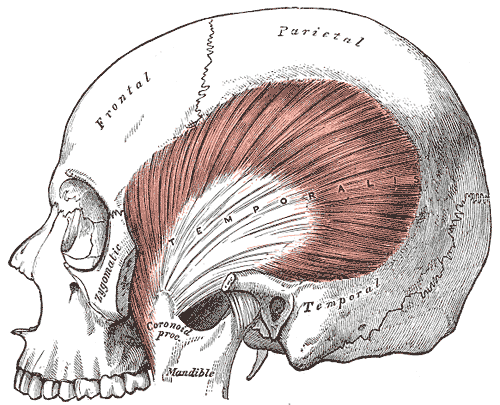
Chewing muscles raise and move the lower jaw. Their tenderness and fatigue can be felt in the cheek or temple and may accompany teeth clenching.

At your appointment: we assess muscle tenderness and discuss strain, sleep and clenching. We clarify the source of pain during the examination.

Meet when the mouth closes

Tooth contacts matter for chewing and planning restorations. Before extensive work, we assess how the future teeth will meet during different movements.

At your appointment: we check contacts, wear and the condition of restorations. Changing the bite is not a universal treatment for TMJ pain.

Clicking ≠ a diagnosis.

If a joint clicks without pain and the mouth opens freely, treatment is often unnecessary. Pain, locking or changes in usual movement warrant an examination.

03 / The White Art team

Gnathology —
the whole team’s approach.

All our prosthodontists and orthodontists are gnathologists.

Working with joints, muscles and the bite is part of each specialist’s training. We therefore consider tooth restoration and alignment in relation to the function of the entire chewing system.

Vasilisa Valeryevna Paliy — White Art chief dentist, prosthodontist and gnathologist

Chief dentist
Prosthodontist · gnathologist

Vasilisa Valeryevna
Paliy

Clinic founder. Combines aesthetics and function in prosthodontic treatment: a future smile should take account of joints, muscles and tooth contacts.

Meet the doctor ↗
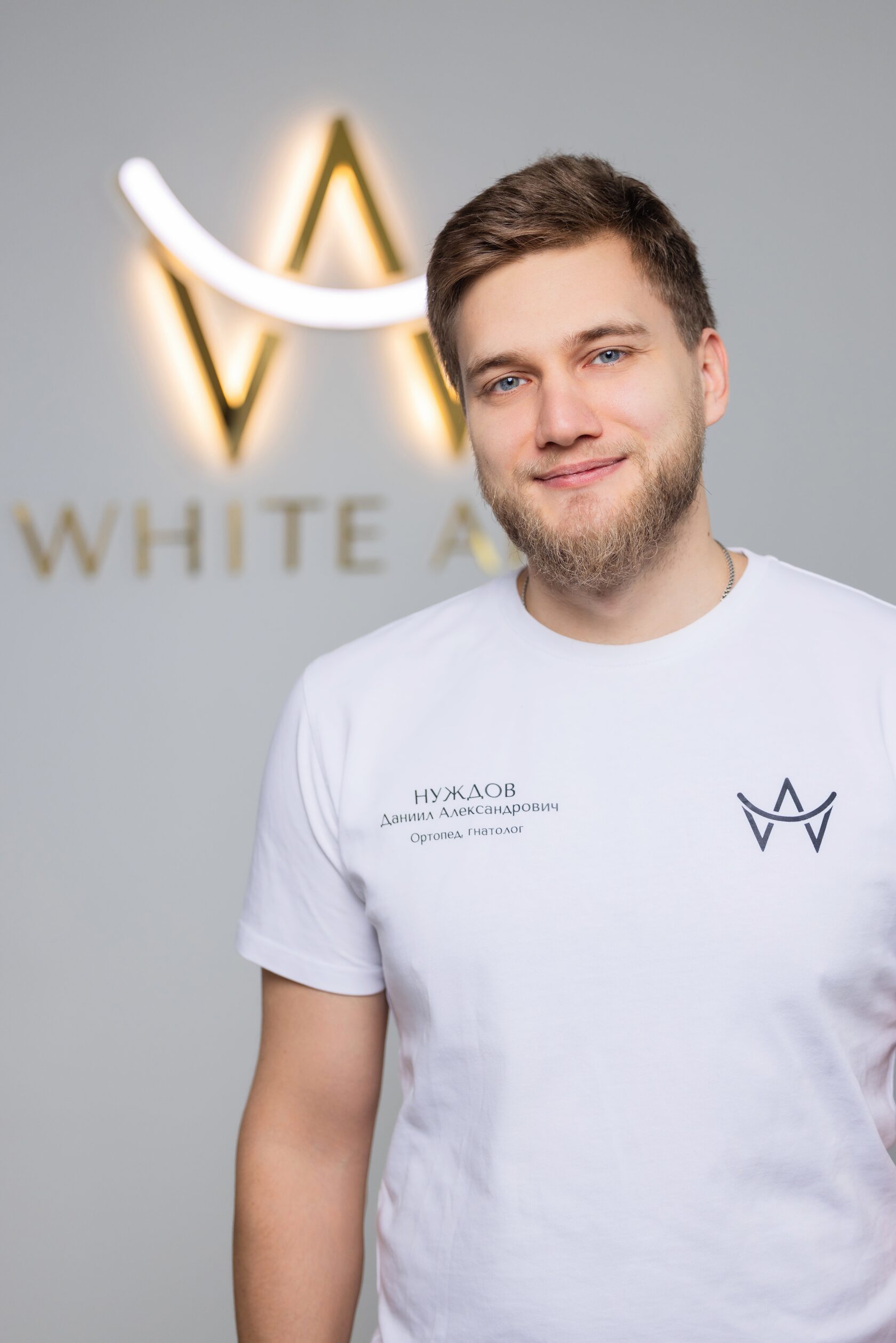
Daniil Alexandrovich Nuzhdov — White Art prosthodontist and gnathologist

Prosthodontist · gnathologist
Trained with Gregor Slavicek

Daniil Alexandrovich
Nuzhdov

Functional diagnostics and tooth restoration: from assessing jaw movement to crowns, veneers and implant-supported prosthetics.

Meet the doctor ↗
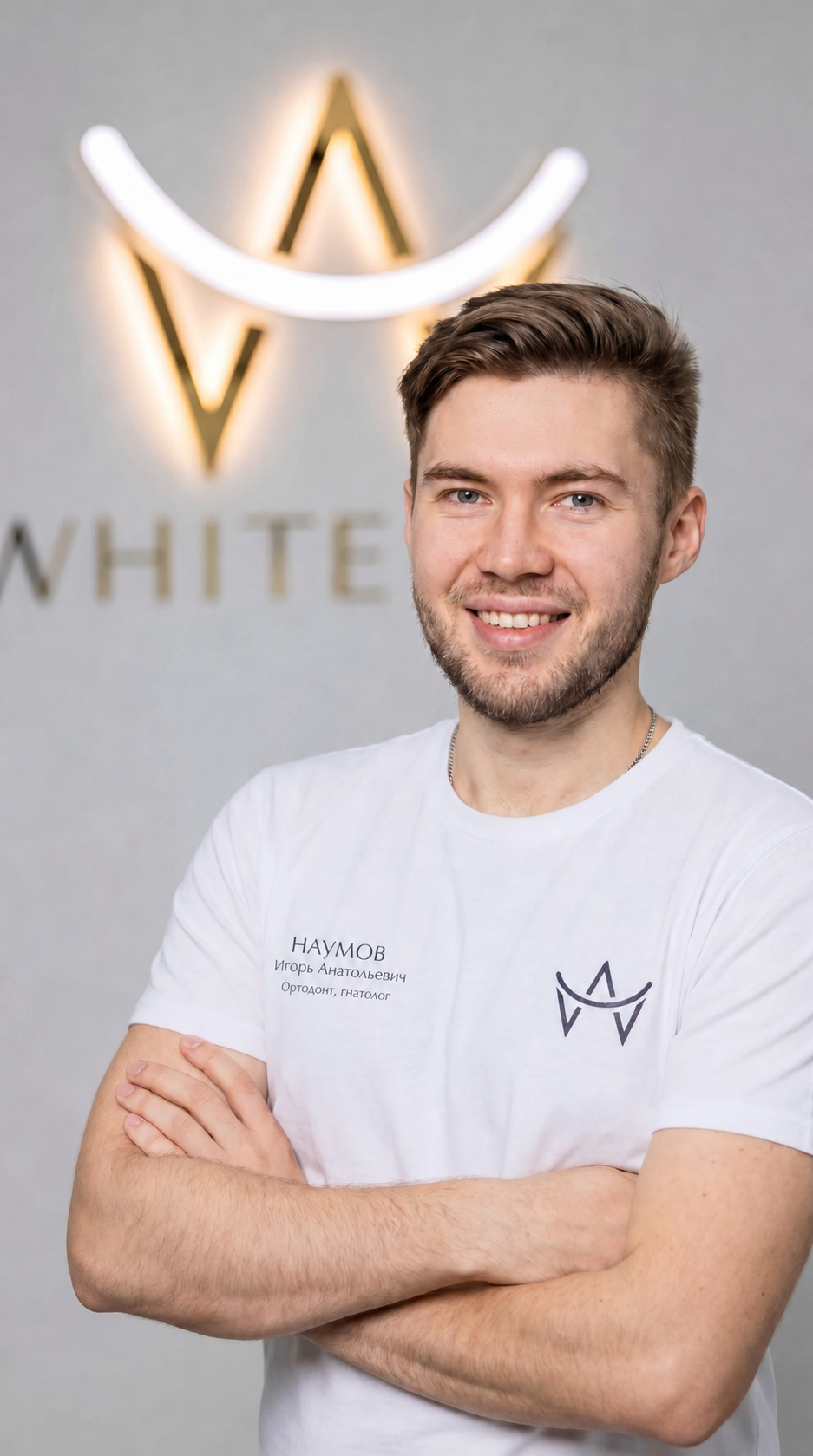
Igor Anatolyevich Naumov — White Art orthodontist and gnathologist

Orthodontist
Gnathologist

Igor Anatolyevich
Naumov

Bite correction with assessment of joints and muscles. The orthodontic plan considers jaw function and, where necessary, future tooth restoration.

Meet the doctor ↗

First-hand knowledge

Personal training
with Gregor Slavicek.

Daniil Nuzhdov trained personally with Gregor Slavicek, a teacher of functional diagnostics, condylography and splint therapy.

This training helps relate concerns to examination findings and recorded jaw movements, and consider the future shape and function of restored teeth.

Book with Daniil Alexandrovich ↗
Professor Rudolf Slavicek, 1928–2022
Rudolf Slavicek · 1928–2022
Photo: VieSID ↗

Gregor’s father. Author of the concept.

Rudolf Slavicek:
seeing the whole system.

Professor Rudolf Slavicek, Gregor’s father, was a pioneer of functional and interdisciplinary dentistry. He studied the biomechanics of the chewing system and developed a concept that considers teeth, muscles and joints in relation to one another.

His research laid the foundations for the Vienna School of Interdisciplinary Dentistry, VieSID. Gregor continued the family’s professional tradition through functional diagnostics and teaching dentists.

Daniil Nuzhdov trained personally with Gregor and applies this knowledge to diagnostics and treatment planning at White Art.

Different tasks. A coordinated plan.

If a prosthodontist and orthodontist are involved, their decisions should complement each other. We explain examination findings, possible care options and the purpose of each stage.

I restore the function of the entire chewing system, rather than an individual crown.
Daniil Nuzhdov
From the doctor’s account of his work

04 / Your first appointment

First, we listen to you.
Then, we investigate.

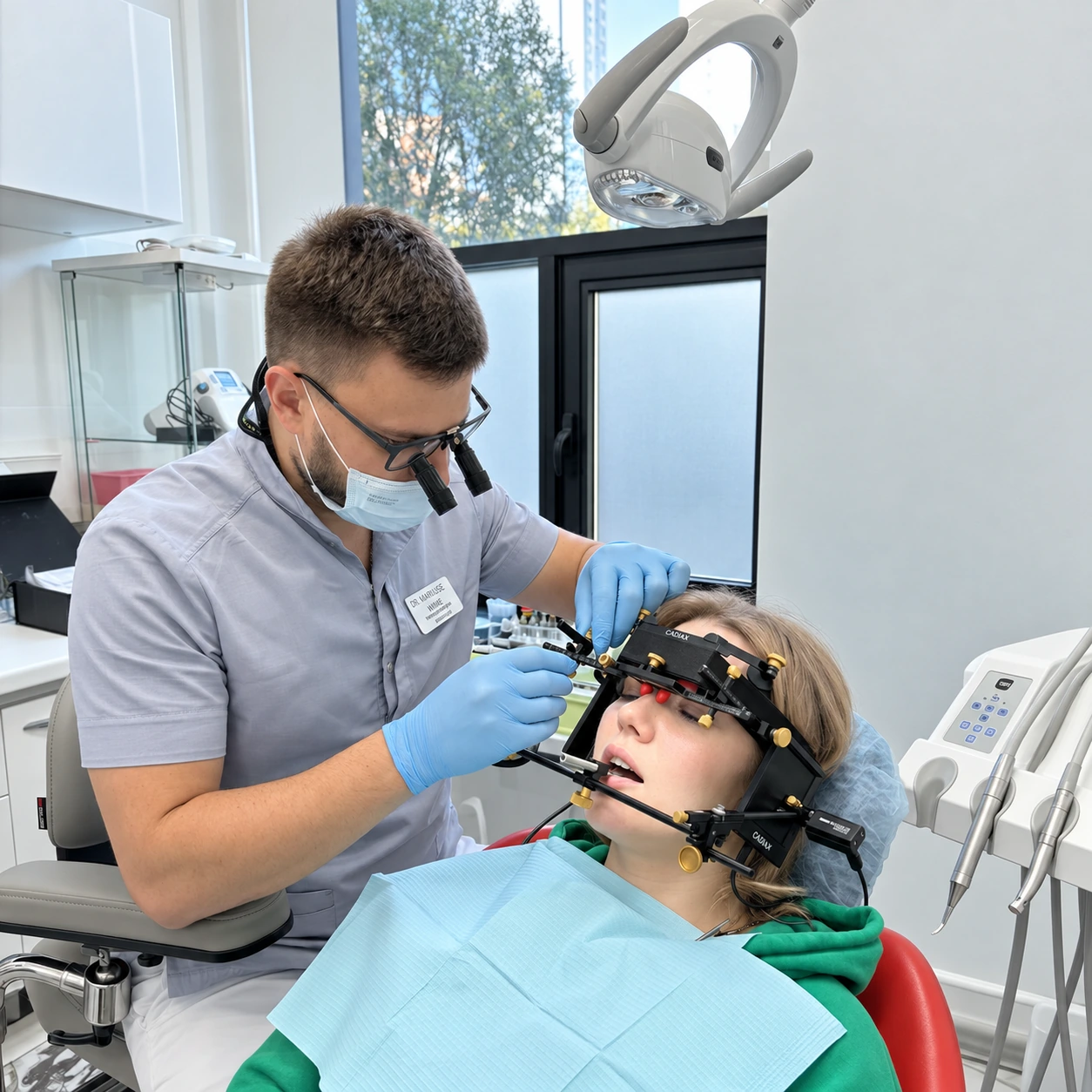
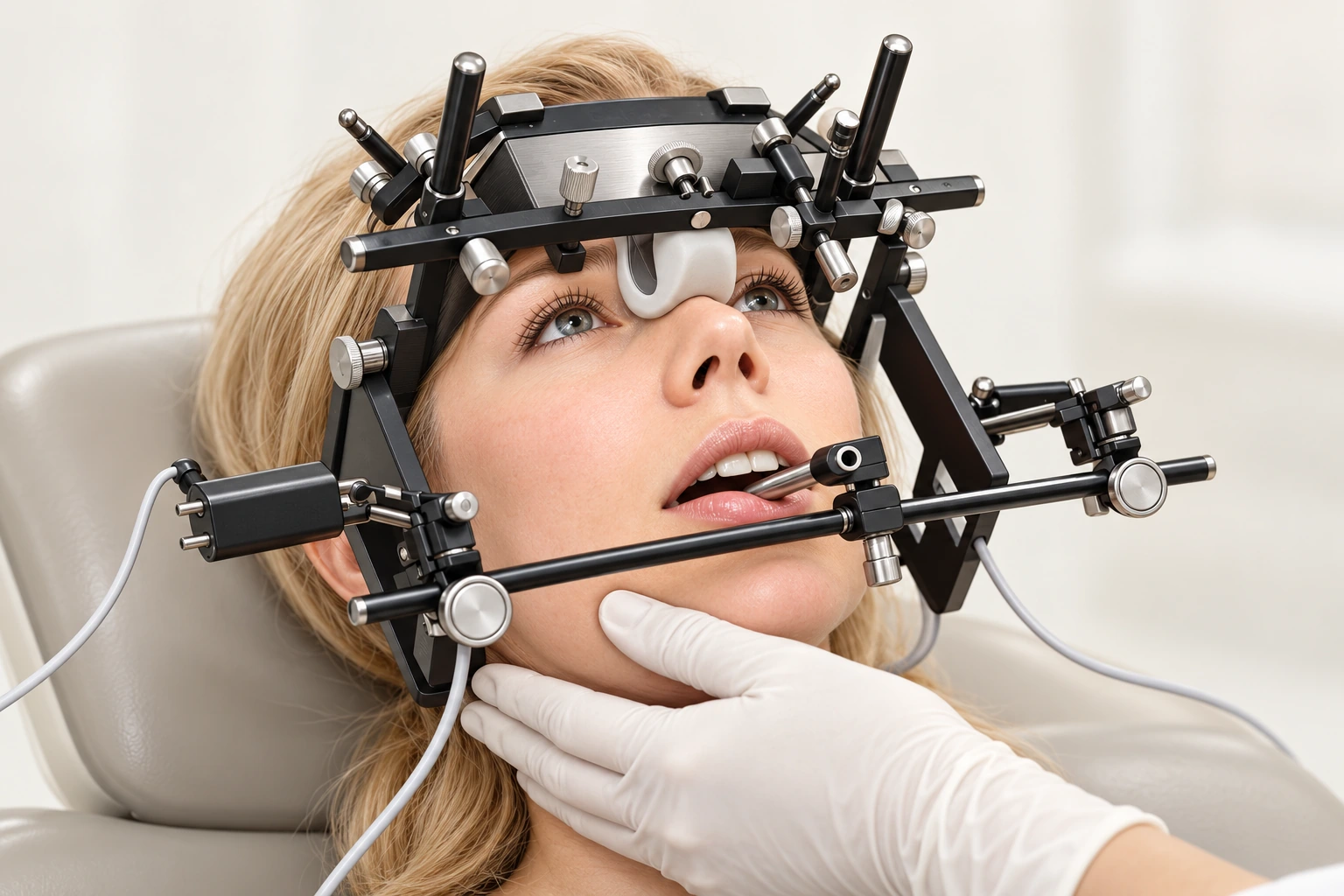
Daniil Nuzhdov fits a CADIAX system to a patient at White Art

You do not need to know your diagnosis or choose an appliance before your first visit. Tell us what troubles you and bring existing investigations. We will confirm the appointment length when you book.

  1. 01

    First, you tell us

    Tell us when symptoms appeared, what increases discomfort and what treatment you have had. The doctor also needs to know how this affects sleep, eating and daily life.

  2. 02

    Then, a gentle examination

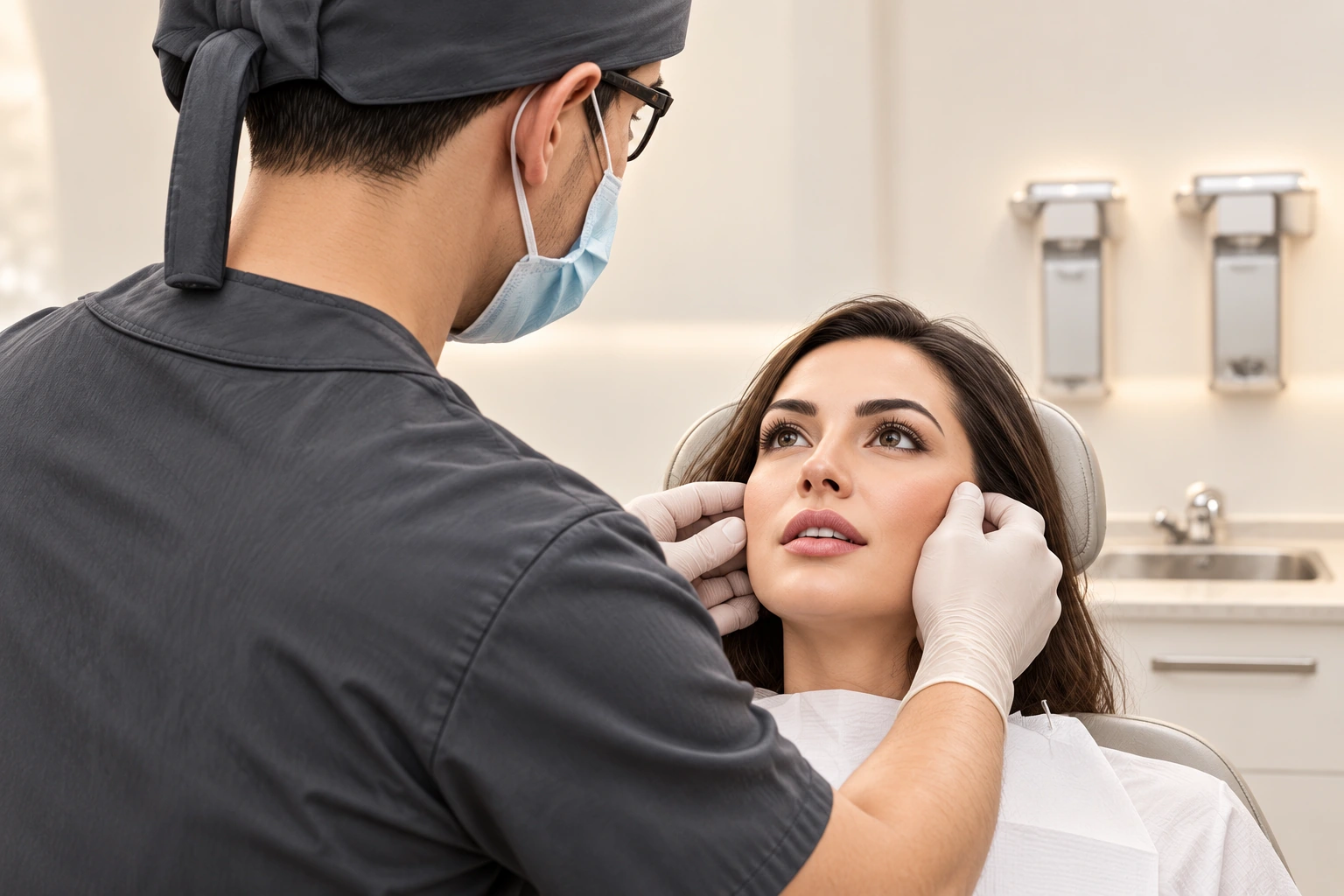
    The doctor checks movements, muscles, joints and tooth contacts. You can warn of a painful movement and request a break.

  3. 03

    Investigations for a specific purpose

    The doctor reviews your existing images and reports. If information is insufficient, they explain what needs clarification and which investigation can help.

  4. 04

    A plan you understand

    After the examination, we discuss findings and possible care options, the sequence of stages, costs and ways to assess results. You decide on treatment after your questions have been answered.

05 / Gnathology according to Slavicek

A smile should be
beautiful. And function well.

Rudolf Slavicek’s concept considers the relationship between teeth, muscles and joints. When planning treatment, we account for how teeth meet and how the lower jaw moves during chewing and speaking.

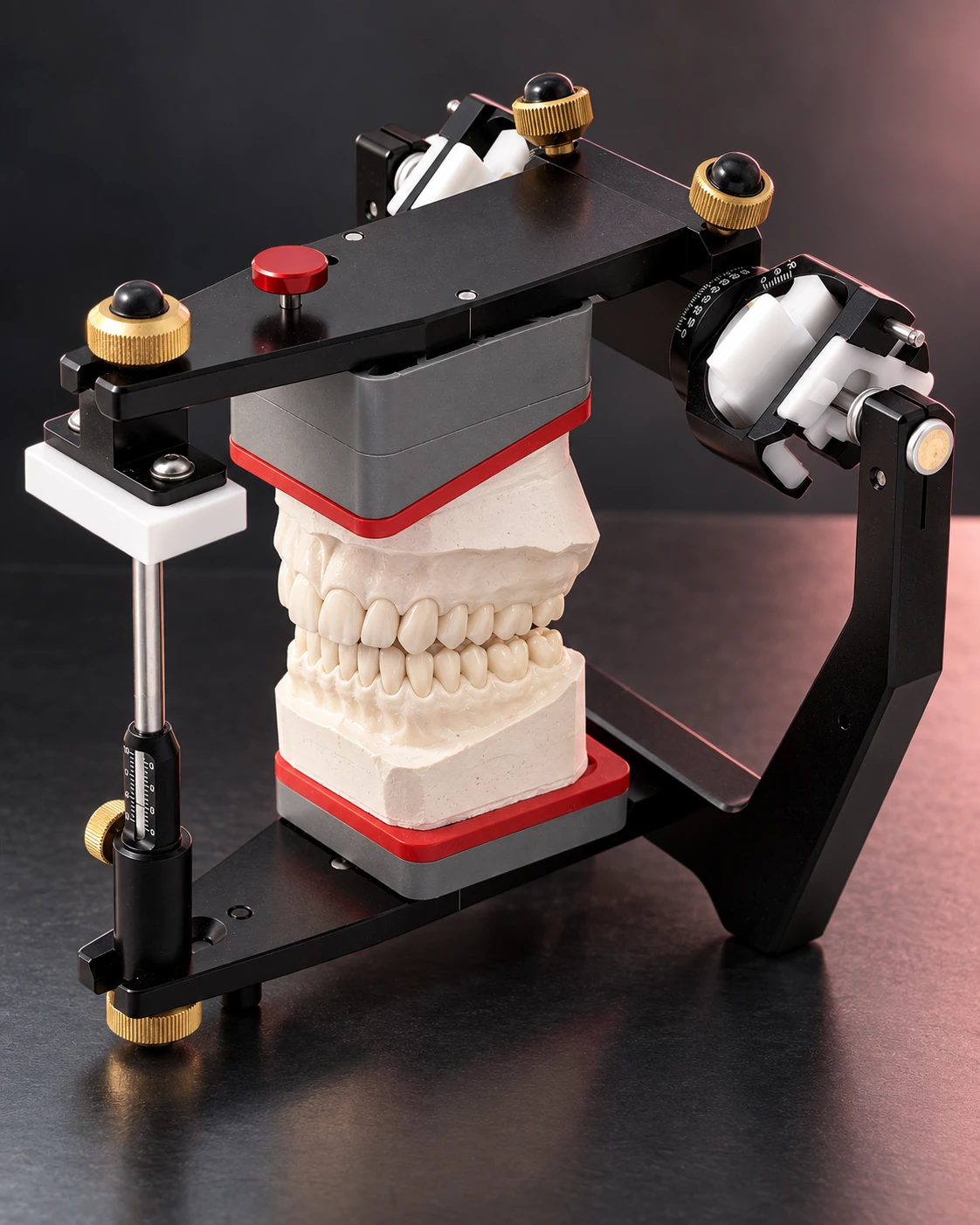
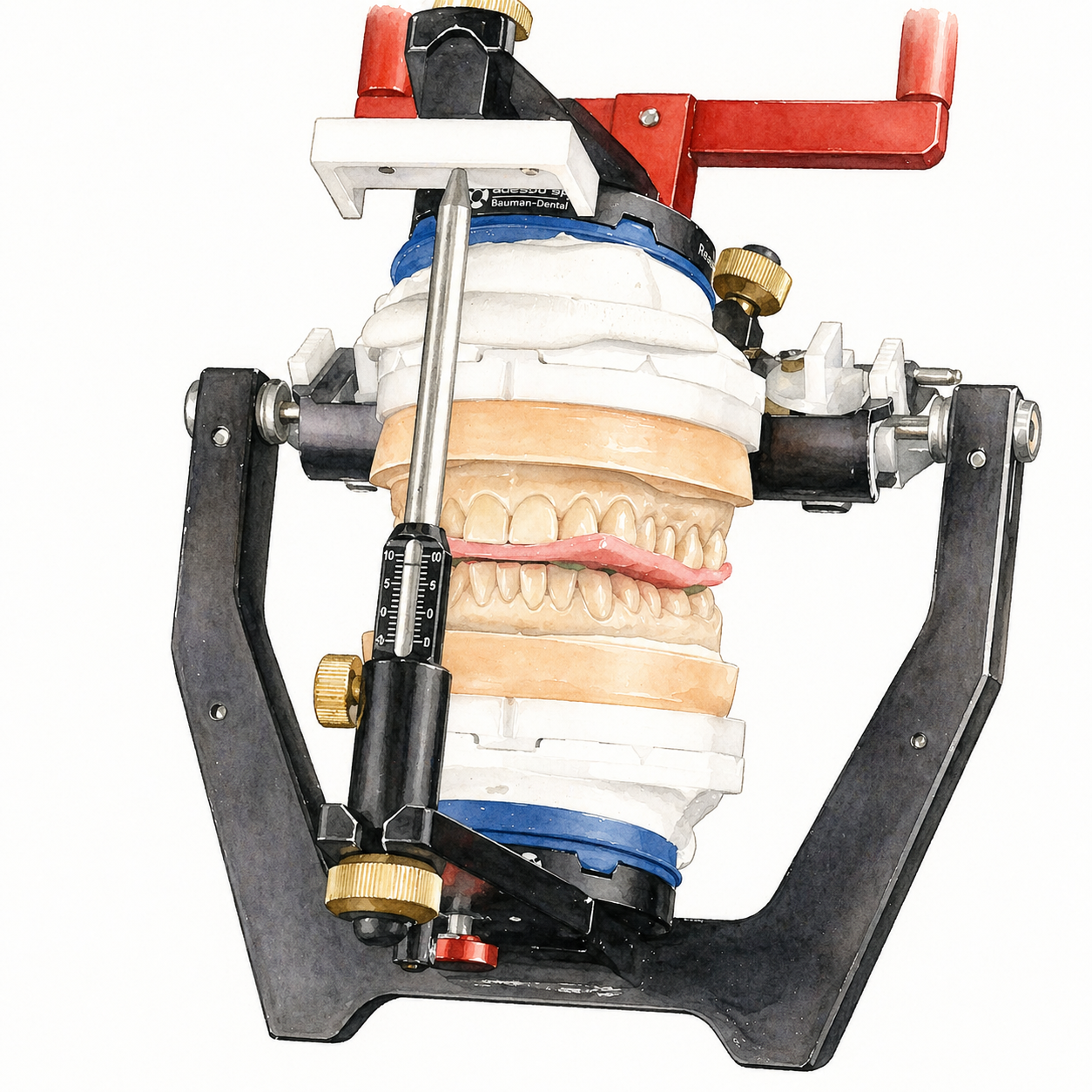
Illustration of an articulator with tooth models, based on real equipmentPlanning with function in mind
01

Understand the person

We start with your symptoms and treatment history, discussing daily habits, sleep and muscle strain. This matters because several factors may contribute to pain.

02

Record function

If the clinical task requires it, we record jaw movements and assess tooth contacts. We compare these findings with the examination and images.

03

Incorporate it into the plan

Individual data helps adjust an articulator, make a splint or model future restorations with your jaw movements in mind.

Each investigation needs a specific question: what information will it provide and how will it guide treatment? The extent of diagnostics is therefore determined individually.

06 / Technology with a purpose

See movement.
Understand more.

CADIAX 4 and SDI Matrix record jaw movements for analysis and planning. TENS serves a different purpose: when indicated, it is an additional procedure for muscular symptoms.

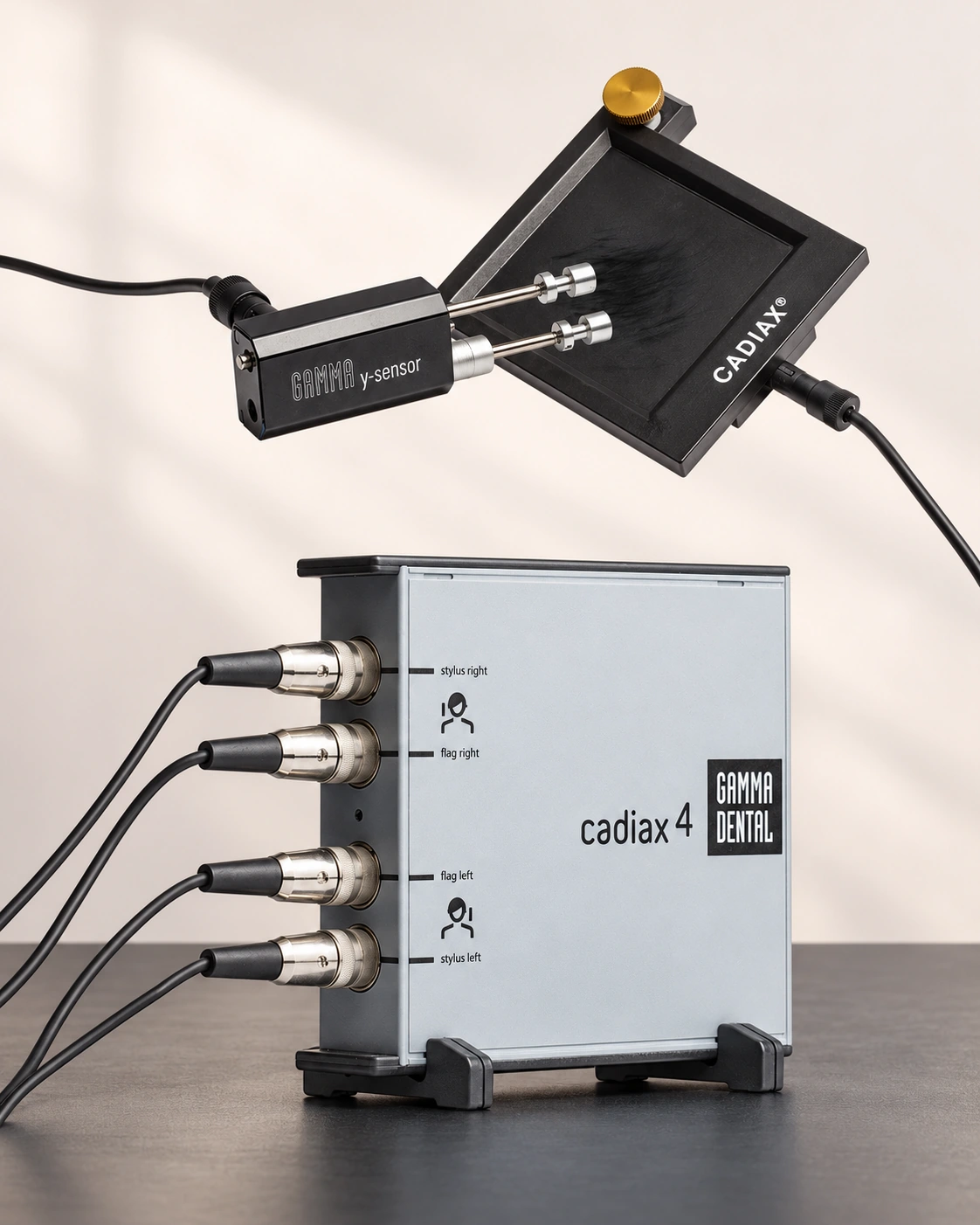
CADIAX 4 recording unit and sensors · illustration

Condylography

How exactly does your jaw move?

GAMMA’s CADIAX 4 condylograph records lower jaw movements. The doctor analyses the paths and uses the data to individually adjust an articulator, a device that reproduces jaw movements using tooth models.

How it works

The doctor fits the recording system. You open and close your mouth and move your jaw as instructed. The examination does not use X-rays. Recording usually takes around 10–15 minutes and the entire visit 60–90 minutes; we confirm the duration when booking.

What you should understand

Movement recording complements the examination. It does not show the joint disc or replace MRI.

Different questions.
Different investigations.

Movement recording and assessment of soft tissues and bones provide different information. Explore what each method can reveal.

The doctor determines the extent of testing after an examination. This section explains methods and does not prescribe investigations.

Starting point

Discussion and clinical examination

Where it hurts, when symptoms appear, how the mouth opens, whether joints and muscles are tender, and the condition of teeth: this is where the search for a source of pain begins.

There is no single universal test for all TMJ disorders. If information is insufficient, the doctor explains what needs clarification.

Individual function

Condylography / axiography

CADIAX 4 and SDI Matrix record lower jaw movement paths. The data is used to analyse function and plan dental treatment.

Movement recording does not show the joint disc or replace MRI. Two recording methods are not automatically prescribed together.

Disc and soft tissues

MRI of the temporomandibular joints

Helps assess the joint disc and soft tissues when a relevant clinical question remains after the examination.

Images are assessed alongside symptoms and examination findings. Not every patient with painless clicking needs MRI.

Bone structures

CT / CBCT

Shows the bones of the joints and jaws. It is prescribed when this particular information is needed to choose a treatment approach.

CT does not replace MRI for assessing the joint disc. The need for testing is determined by clinical indications.

07 / Treating TMJ and muscular pain

How treatment works.
What we do and why.

Care aims to reduce pain, improve mouth opening and restore comfortable chewing. The plan depends on the source of symptoms: the joint, chewing muscles, teeth or a combination of factors.

  1. 01

    Clarify the source of symptoms

    We compare symptoms, examination findings and necessary investigations. We explain what we have established and which questions remain.

  2. 02

    Choose appropriate care

    We usually start with conservative, reversible measures. For each prescription, we discuss its purpose and expected changes.

  3. 03

    Check results

    We assess pain, mouth opening and comfort when chewing. At follow-up visits, we adjust the plan if improvement is insufficient.

EVERYDAY STRAIN

Support joints and muscles

The doctor explains how to reduce triggering strain, notice daytime clenching and choose exercises appropriate to your situation. Other pain-relief methods may be prescribed if necessary.

Exercises and routines are chosen after examination. Do not exercise the joint through pain.

CUSTOM SPLINT

A splint when indicated

A removable splint is made to fit your teeth. It may protect them from damage and form part of care for muscular or joint pain.

The doctor checks the fit, prescribes a wearing schedule and follow-up visits. A splint does not guarantee an end to bruxism or relief from all pain.

ADDITIONAL METHODS

TENS and muscle care

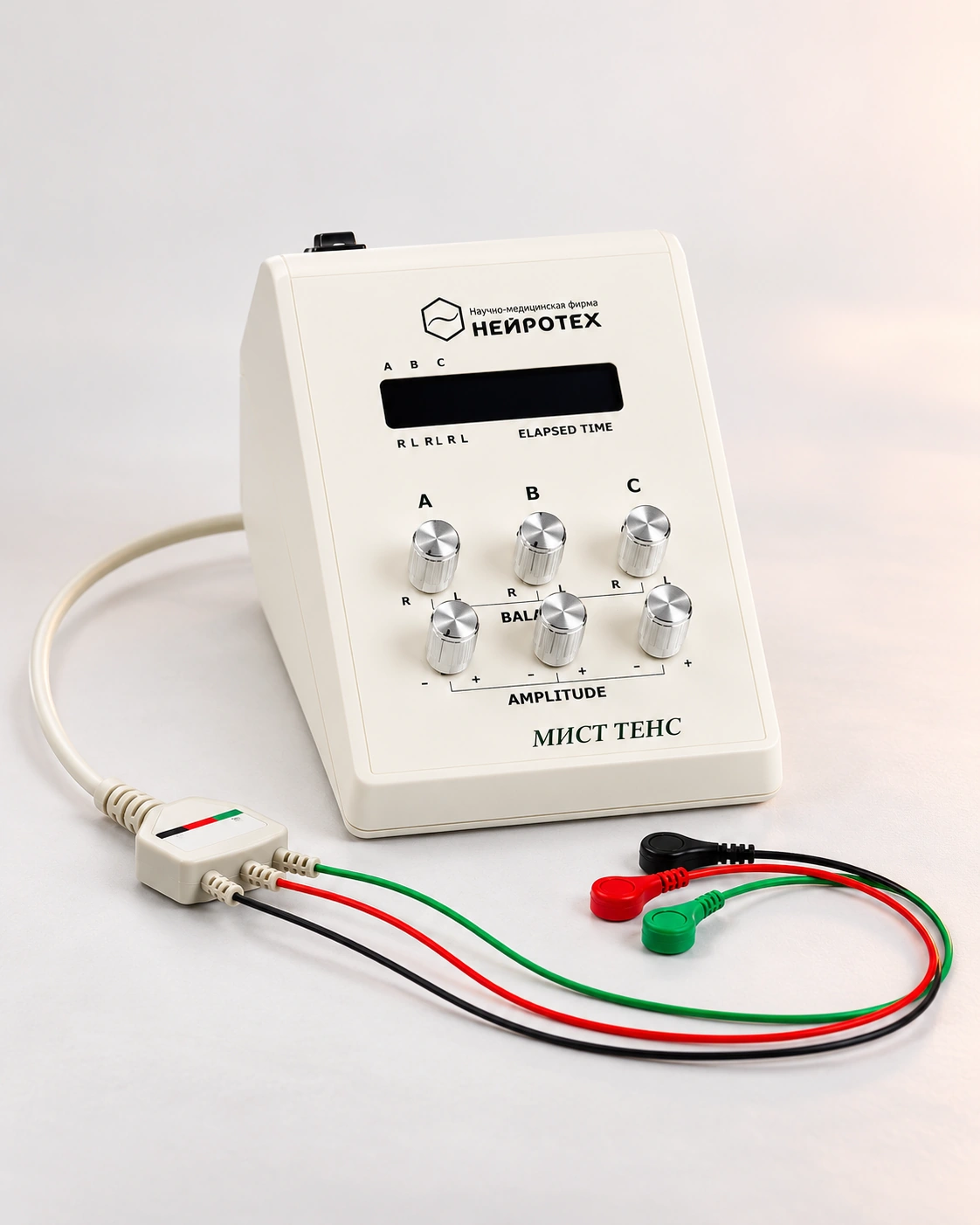
Electrical pulses through skin electrodes may be used as an additional method to relieve muscular symptoms. The doctor assesses indications, limitations and your response.

TENS does not replace diagnostics. Evidence for lasting effects on TMJ-related pain is limited.

RESTORATIONS AND THE BITE

Treating teeth for their specific needs

If worn teeth need restoring, restorations replacing or the bite correcting, the prosthodontist and orthodontist incorporate functional data into the overall plan.

Joint pain alone does not mean braces, veneers or crowns on every tooth are needed.

Why use a Kois deprogrammer?

This is a separate appliance that temporarily changes habitual tooth contacts for a specific clinical purpose. Its design and purpose differ from a splint. The doctor explains what information they seek and whether you need this stage.

If the cause of pain is not purely dental

The doctor will recommend an appropriate specialist if needed. With persistent pain, sleep, strain, stress and general wellbeing matter. This does not mean the symptoms are “just nerves”.

What if the splint makes pain worse?

Stop using the splint and contact your doctor. Do not adjust it yourself or try to get used to increasing pain.

You understand the purpose of each stage.
Before starting, we discuss the sequence, follow-up visits and cost.

Discuss your plan with a gnathologist

08 / What “in depth” means

From tooth contacts
to splint adjustment.

The doctor and dental technician need data on how your teeth meet and your lower jaw moves. Making an appliance is not enough: how it works must also be checked.

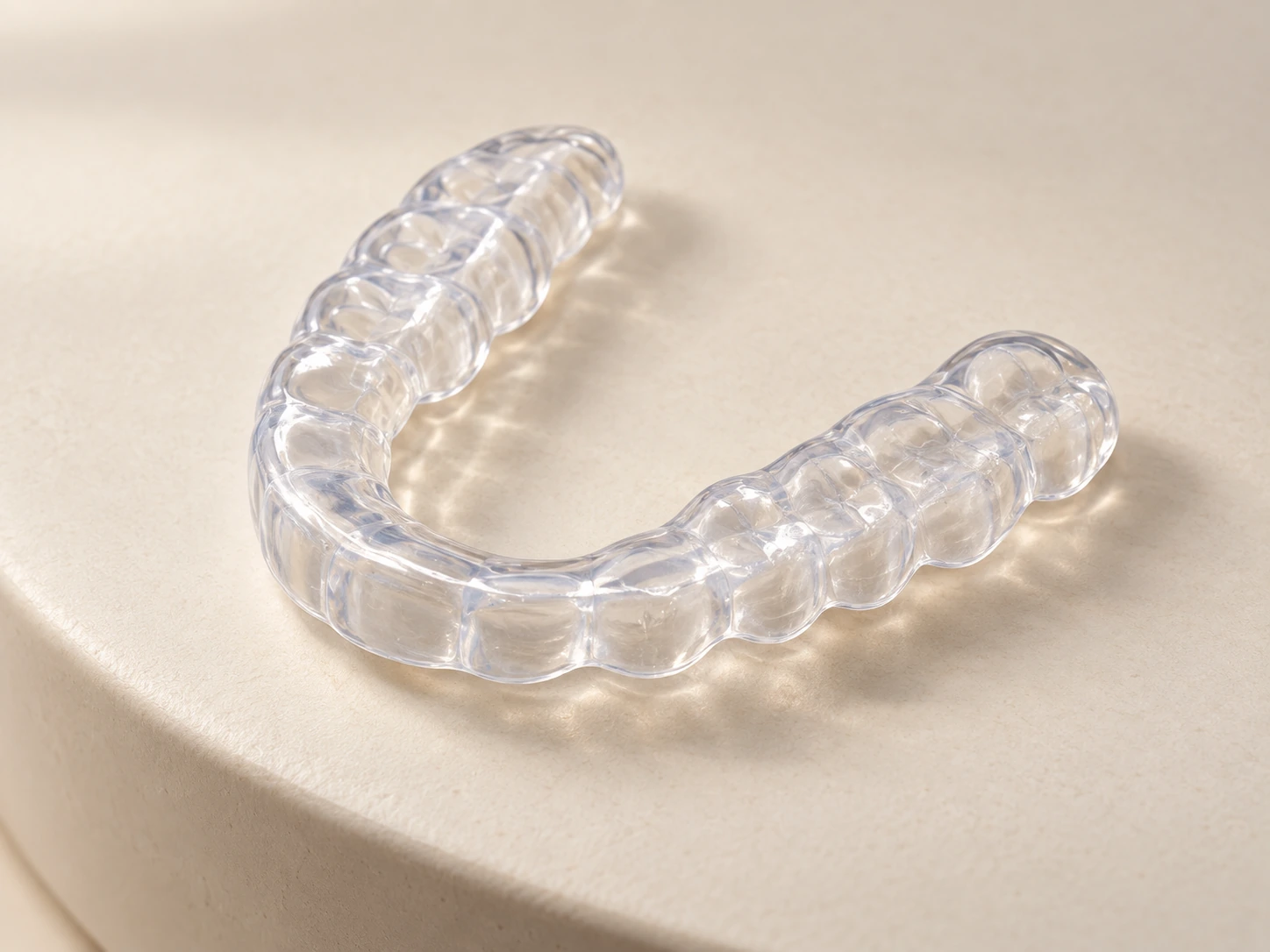
Brux Checker from White Art materials
TOOTH CONTACTS

Brux Checker

A thin diagnostic mouthguard helps study tooth contacts. Findings are assessed alongside the examination and your symptoms.

Tooth models in an articulator
INDIVIDUAL MOVEMENTS

Articulator and models

We transfer data to work with models. Split-Cast helps position models accurately in the articulator.

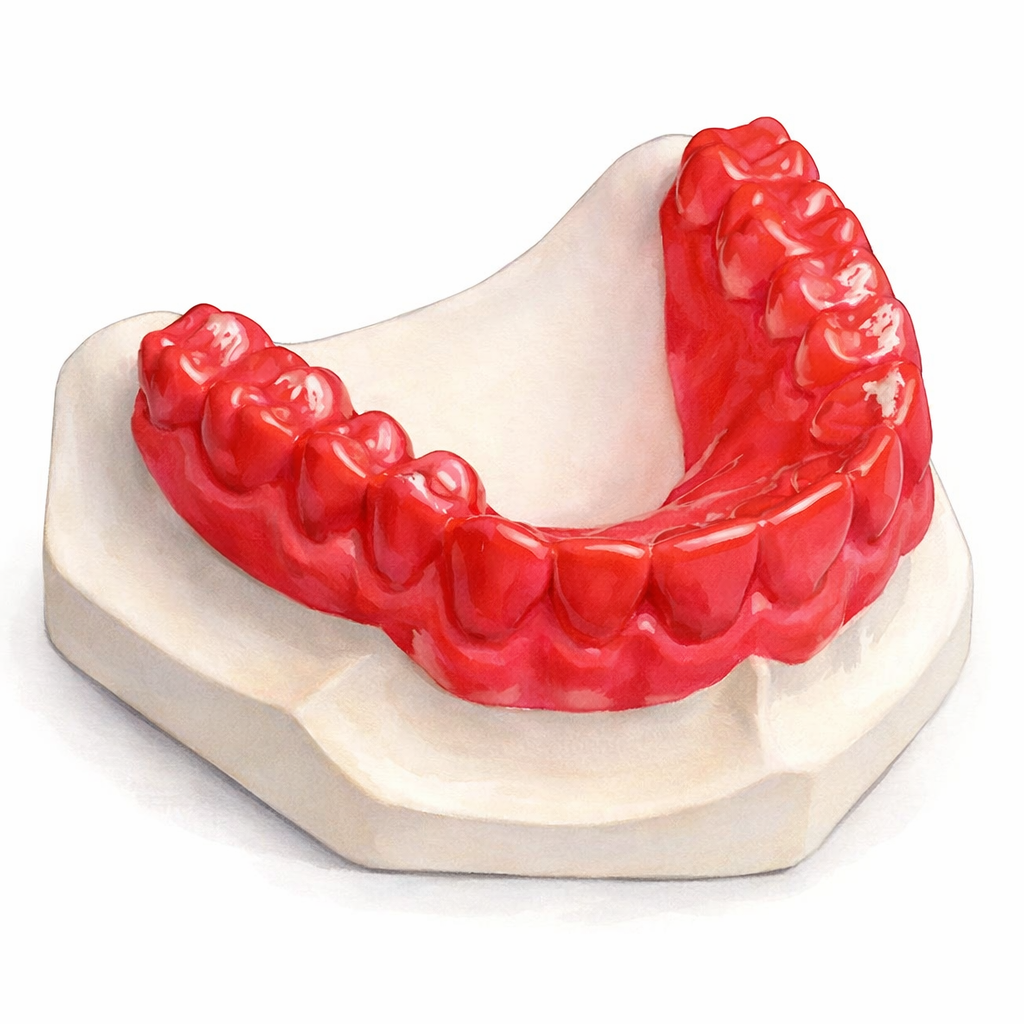
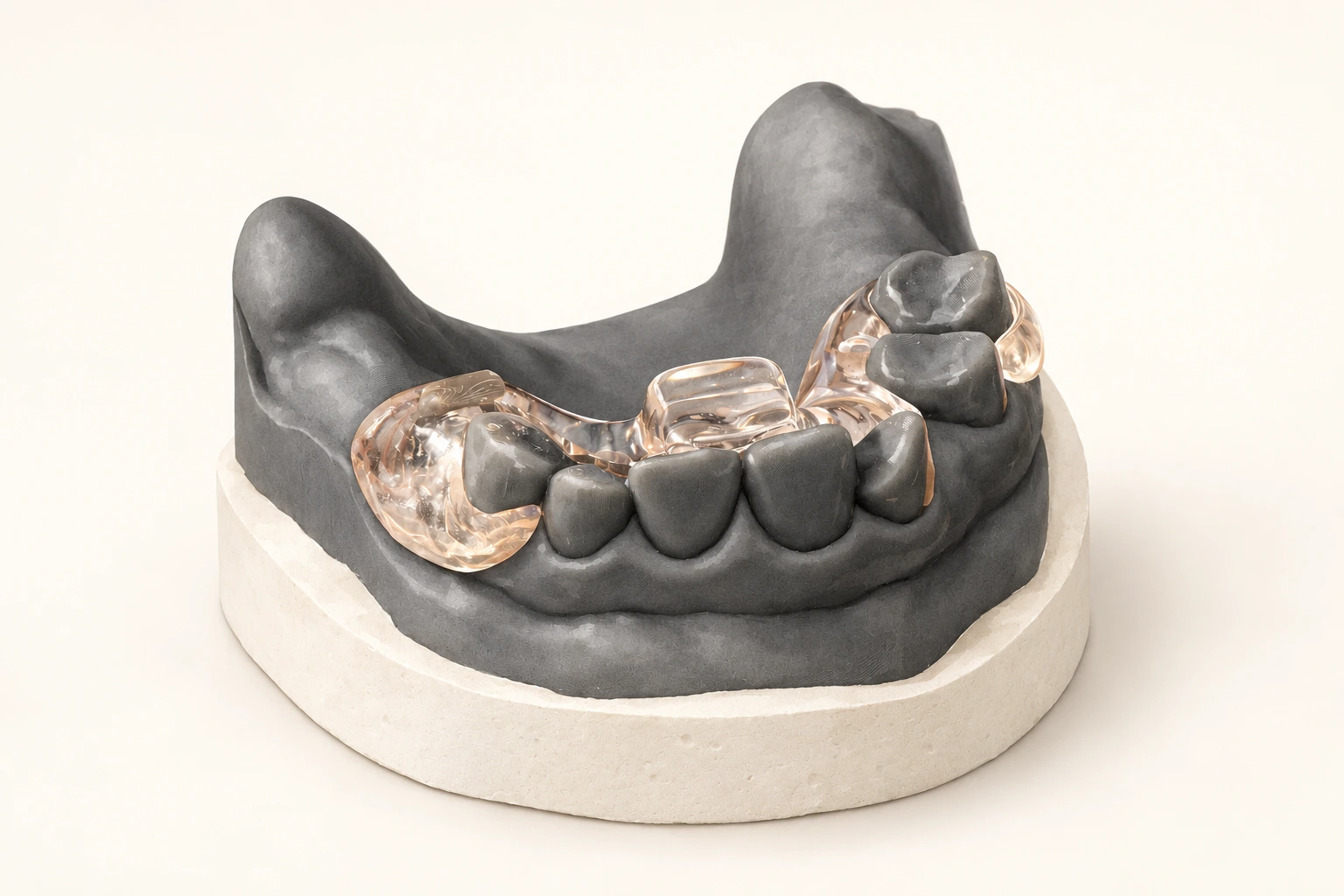
Illustration of a custom occlusal splint
CUSTOM SPLINT

The splint and its adjustment

We make a splint for the clinical task and check its fit and tooth contacts. We then assess how you feel and the outcome at follow-up visits.

The prosthodontist, orthodontist and dental technician work to one plan. At White Art, all prosthodontists and orthodontists are gnathologists. A general dentist and surgeon join treatment when needed so that each stage supports the overall goal.

09 / When you clench your teeth

Do your chewing muscles
hurt in the morning?

Bruxism can occur during sleep or while awake. You may clench your teeth without noticing.

Wear, chips and morning muscle tenderness are reasons to investigate. The doctor assesses the consequences, habits, sleep and other possible factors.

A mouthguard may protect teeth from damage, but care extends beyond it. The doctor also assesses daytime clenching, muscle strain and associated conditions.

How we assess whether treatment helps

We look beyond graphs: is chewing and opening the mouth easier, has pain intensity changed, do symptoms interfere less often, and is the splint comfortable? We discuss checkpoints beforehand and adjust the plan based on results.

I would like to discuss my symptoms
Illustration: a woman experiences morning discomfort in her chewing muscles
Our goal is greater comfort
in everyday things that matter to you.

10 / Cost

Understand the plan.
Understand the budget.

Cost depends on the questions to be addressed. After your consultation, we agree on the extent of testing and explain which expenses are included in the chosen plan.

Illustration of clinical functional assessment
01DIAGNOSTICS

Basic functional analysis

Clinical assessment of joints, muscles and tooth closure.

40 000 ₽

Start by assessing function and defining the next step.

What the assessment includes

Review of symptoms and treatment history; assessment of mouth opening and jaw movements; palpation of chewing muscles and TMJs; assessment of joint sounds and tooth contacts; and functional tests. Findings lead to conclusions and recommendations for further investigations.

Discuss investigations
CADIAX 4: illustration of the recording system
02DIAGNOSTICS

CADIAX 4 condylography

Instrumental recording and analysis of lower jaw movements.

60 000 ₽

Obtain individual data for functional planning.

What the assessment includes

Preparation and fitting of the CADIAX 4 recording system, recording functional movements and analysing their paths. The data is used for individual functional planning.

Discuss investigations
Illustration of comprehensive functional analysis
03DIAGNOSTICS

Comprehensive functional analysis

Extended assessment for detailed rehabilitation planning.

120 000 ₽

Combine clinical and instrumental findings in a complex situation.

What the assessment includes

Comparison of clinical and instrumental findings, work with models and an articulator, and functional analysis for a comprehensive plan. Additional investigations depend on indications. The exact package contents, images and separate expenses are agreed before starting.

Discuss investigations
These amounts should not automatically be added together.

These are separate services and assessment options, rather than three mandatory stages. We clarify the exact protocol, additional images, follow-up visits and their costs before starting.

Additional methods

When indicated, the doctor may include a custom splint, TENS, a deprogrammer or axiography. We agree on the scope and duration of each stage in advance.

Illustration of a custom splint
CUSTOM SPLINT

Splint

40 000 ₽

Fabrication of an appliance for a clinical task. The wearing schedule and follow-up visits are discussed with the doctor.

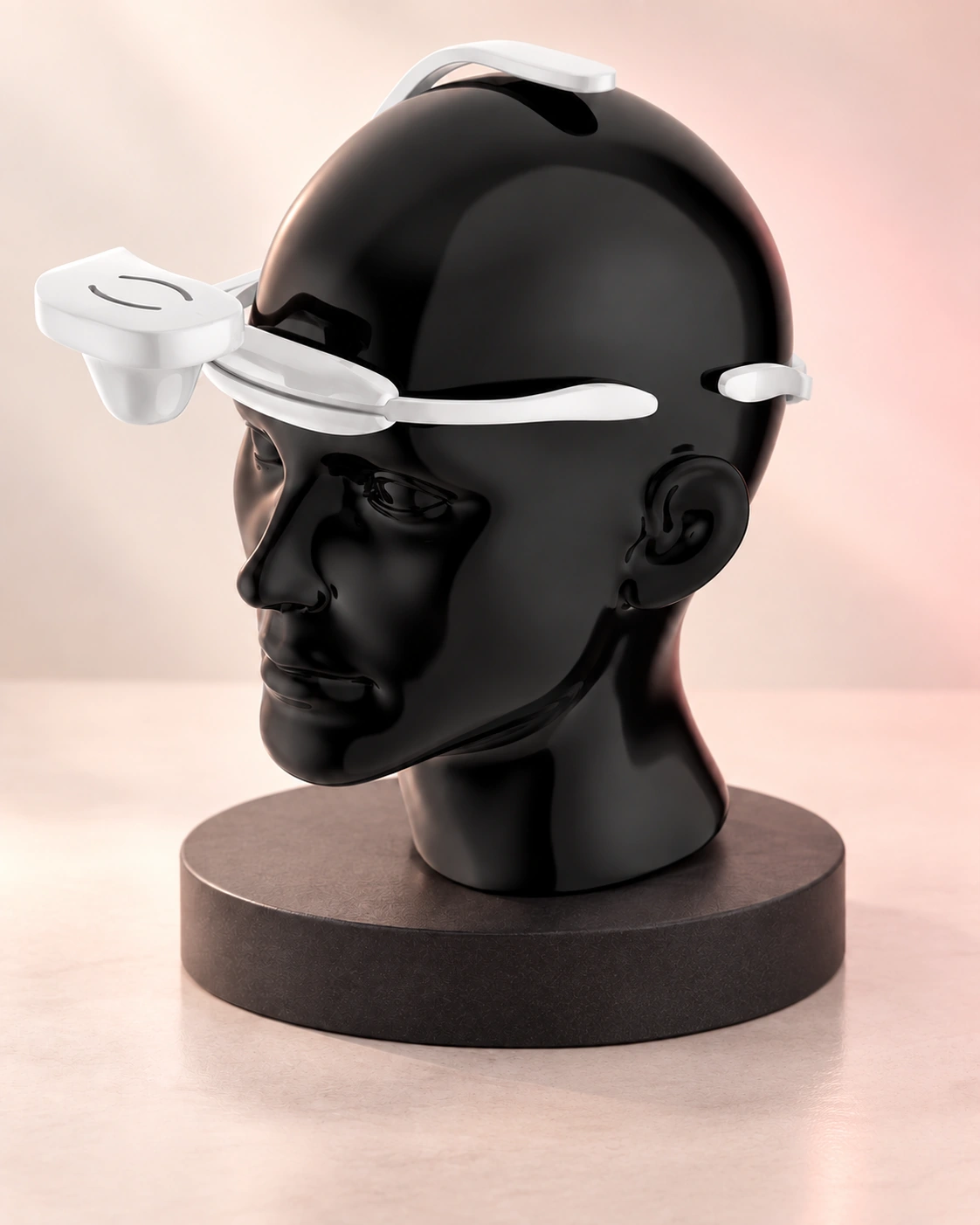
Illustration of the MIST TENS Neurotech device
ADDITIONAL METHOD

TENS service

20 000 ₽

Transcutaneous electrical nerve stimulation when indicated. We agree on the scope of the service before starting.

Illustration of a Kois deprogrammer
ASSESSING TOOTH CLOSURE

Kois deprogrammer

20 000 ₽

An appliance to temporarily separate the back teeth. Prescribed for a specific diagnostic purpose.

SDI Matrix: illustration of the optical module
MOVEMENT RECORDING

SDI Matrix axiography

Confirmed when booking

Optical recording of lower jaw movements. The doctor determines whether the examination is needed.

You do not need to choose investigations yourself.

Start with a consultation. The administrator can tell you the initial appointment cost and current terms.

Start with a consultation
Full White Art price list ↗

11 / If you feel anxious

It is fine
not to know the terminology.
It is fine to feel nervous.

Tell us what has changed and how it affects your life. Your observations are enough for the first discussion: medical terminology is not required.

If you fear pain or have had a difficult treatment experience, tell us at the start. You can ask the doctor to explain the next step or take a break during the examination.

Your first appointment can simply be about understanding.

At your consultation, you can discuss symptoms, hear the doctor’s explanation and then decide how to proceed.

A short checklist
before your visit

  1. Bring images and reports if you have them

    MRI, CT and previous treatment plans. You do not need to obtain new images especially for the consultation.

  2. Recall how your symptoms have changed

    When they started, what increases or reduces discomfort and whether you grind your teeth at night.

  3. Bring your mouthguard or splint

    If you already wear one. The doctor needs to see the appliance and know your wearing schedule.

  4. Write down questions and medication names

    You can show a note on your phone. You do not need to remember everything.

12 / Calm answers

What you
wanted to ask.

If your question is not here, you can ask it at your consultation.

Message the administrator ↗
What is the TMJ, and what does dysfunction mean?

TMJ means temporomandibular joint. There are two, in front of the ears, involved in lower jaw movement. “Dysfunction” describes various disorders of the joints and chewing muscles; it is not one diagnosis or a single treatment protocol.

What is a gnathologist, and what do they treat?

A dentist who specialises in the function of the chewing system: joints, chewing muscles and tooth contacts. Patients seek help for pain, limited movement, muscle tension, tooth wear and functional planning of extensive dental work.

Why does the joint click when I open my mouth? Is it dangerous?

Clicking may relate to movement of the joint disc. Sound alone cannot identify the cause: the doctor considers pain, freedom of movement and examination findings. Painless clicking alone often needs no treatment. Discomfort, locking or reduced mouth opening warrant an examination. Sound cannot determine a diagnosis or the need for a splint.

Pain near the joint by the ear: which doctor should I see?

You can start with a dentist who treats TMJs and orofacial pain. They check teeth, muscles and joints and recommend an appropriate specialist if another cause is suspected. Pain in or near the ear can also have non-dental causes.

I cannot open or close my mouth. What should I do?

Sudden locking, inability to close the mouth, severely restricted eating, injury, or swelling with fever require urgent in-person care. Do not try to reposition your jaw yourself. For occasional locking without acute symptoms, arrange an examination.

How does axiography differ from condylography?

Both record lower jaw movements. White Art uses CADIAX 4 and the SDI Matrix optical system. They use different recording methods and protocols. The doctor chooses the examination for the task; neither images the joint disc.

Can TMJ MRI be replaced by condylography?

No: MRI shows soft tissues and the joint disc, while condylography records movement. This does not mean every patient needs both. The need is determined after examination.

Does condylography hurt? Is there radiation?

Movement recording does not use X-rays. A recording system is fitted to your face and you move your jaw as instructed. If a movement hurts, tell the doctor: do not force it.

What is splint therapy in simple terms?

It uses a custom removable splint prescribed by a doctor. It is made to fit your teeth, its fit and contacts are checked, and a wearing schedule and follow-up visits are arranged. Its purpose depends on the clinical situation: protecting teeth or helping with joint and muscular pain.

Is a splint the same as a regular bruxism mouthguard?

Names may overlap, but design, material, tooth contacts and wearing schedule depend on the purpose. A generic shop-bought mouthguard cannot replace a custom splint prescribed and checked by a doctor.

How long should I wear a splint?

There is no universal duration or schedule. The doctor prescribes these after testing, checks fit and assesses results at follow-up visits. Follow the prescribed schedule. If the splint causes or worsens pain, stop using it and contact your doctor.

Does TENS treat the cause of dysfunction?

TENS may be considered an additional approach to symptom relief. It does not independently identify the cause of pain. Evidence for long-term effects on TMJ dysfunction-related pain is limited, so a justified prescription and outcome assessment matter.

Do I have to correct my bite or get veneers?

No. Orthodontics and restorations are prescribed for their own indications. TMJ pain does not mean all your teeth need changing. In complex rehabilitation, functional diagnostics helps plan this work appropriately.

Why do my chewing muscles hurt in the morning?

Morning muscle tenderness and fatigue may accompany teeth clenching or grinding during sleep. This alone cannot establish a bruxism diagnosis. The doctor assesses muscles, joints and teeth and asks about sleep and other possible causes.

How are stress, sleep and teeth clenching related?

Daytime clenching and sleep can affect muscle strain. With persistent pain, the doctor assesses these factors alongside clinical findings. This does not mean symptoms are “just nerves” or can be ignored.

Can I bring images and a mouthguard from another clinic?

Yes. Bring existing investigations, reports, your treatment plan and splint. The doctor reviews them and explains what further information is needed. New investigations are prescribed for a specific purpose.

Are Gregor and Rudolf Slavicek the same person?

No. Rudolf Slavicek is Gregor’s father and the author of the functional concept in dentistry. Gregor Slavicek teaches functional diagnostics, condylography and splint therapy. Dr Nuzhdov trained personally with Gregor Slavicek.

How much does complete TMJ treatment cost?

Cost depends on the diagnosis, extent of testing, chosen methods and follow-up visits. Individual service prices are listed above. After testing, you can discuss a staged financial plan; there is no single amount for all situations.

Do I need MRI before my first gnathology appointment?

You usually do not need MRI or CT especially for a consultation unless already prescribed. Bring existing images and reports. After the examination, the gnathologist explains what information is missing and which method can provide it.

White Art video

Open video separately ↗