Comprehensive bite correction
Noticeable crowding, rotated teeth, bite problems, or the need to create the right space for an implant and future tooth restoration.
Straight teeth are only the visible part of the result. Before treatment, we need to understand how the jaws meet, where forces are distributed, how far roots can safely be moved, how joints and muscles work, and how the profile will change.
Without thorough diagnostics, important limitations may only emerge during treatment. This can require changes in mechanics, longer treatment or avoidable compromises. Such errors are particularly costly in adults with periodontal disease, old restorations, missing teeth or planned implants.
We first define a safe, stable goal, then begin moving the teeth towards it.
A package reflects the complexity of tooth movements, estimated duration and amount of work required. It does not define the level of service or an option to choose by price. The suitable package is determined after diagnostics.
Noticeable crowding, rotated teeth, bite problems, or the need to create the right space for an implant and future tooth restoration.
These examples explain the logic of the packages but do not replace diagnostics. The same visible feature can require different plans for different patients.
Both systems move teeth effectively. They differ in visibility, material properties, suitability for particular mechanics and cost. We discuss the right option after agreeing on the treatment plan.
A compact, strong and versatile system. Metal braces are more visible in the smile, but give the orthodontist a wide range of active mechanics and are often the most practical choice for complex cases.
The material of the braces alone does not determine treatment speed or quality. The result depends primarily on diagnostics, planning, biomechanics and the orthodontist’s work.
These describe design features and specific branded systems rather than separate materials. Self-ligating braces do not automatically make treatment faster, and a well-known brand does not replace a precise plan. We choose mechanics to suit the clinical task.
The orthodontist determines the package after diagnostics. You choose the type of braces and initial payment. The price will not rise if treatment takes longer than estimated or change if the orthodontist finishes earlier.
The first month covers braces placement and the initial payment; the last covers removal and the start of retention. The balance is therefore divided over the treatment months excluding these two stages. The discount applies only to full payment of the orthodontic package. This estimate is for information and is not a public offer.
The dentist chooses diagnostic procedures for your clinical situation, then prepares the final treatment route. The same tests are not prescribed for everyone.
We listen to your concerns and assess your smile, face, profile, teeth and tissues.
We record the initial situation as precise digital data for planning.
We study the roots, bone, tooth positions and anatomical limits of safe movement.
When indicated, we assess the joints, muscles and lower jaw movements, particularly in adult and complex cases.
When needed, we coordinate orthodontics with dental and gum treatment, implants and future aesthetic restorations.
Braces placement is just one day in a longer journey. To make the result predictable, we coordinate diagnostics, preparation, tooth movements and retention in advance.
We identify concerns, goals and possible limitations.
We collect clinical photographs, scans, images and measurements.
We treat tooth decay and inflammation and provide dental hygiene. Extractions are carried out only when indicated.
We place the chosen braces and teach you home care.
We monitor movements, bite and tissue condition at scheduled visits.
We remove the braces, assess the result and begin retention.
In adults, orthodontics often addresses several tasks: creating space for an implant, preparing the smile for veneers, correcting earlier treatment or distributing forces before major rehabilitation.
A comprehensive view of the patient is especially important. Gum and bone condition, old crowns, missing teeth, the TMJ and future prosthodontics should be part of one plan before braces are placed.
After active movement, tissues need time to adapt to the new tooth positions. Retention is therefore an essential part of orthodontic treatment.
A thin wire is bonded to the inside of the teeth to help maintain their position without changing the appearance of the smile.
The clear retainer is worn on a prescribed schedule. Depending on the clinical situation, it supplements a fixed retainer or is used on its own.
We discuss how to maintain the result before braces removal and check it at follow-up visits.
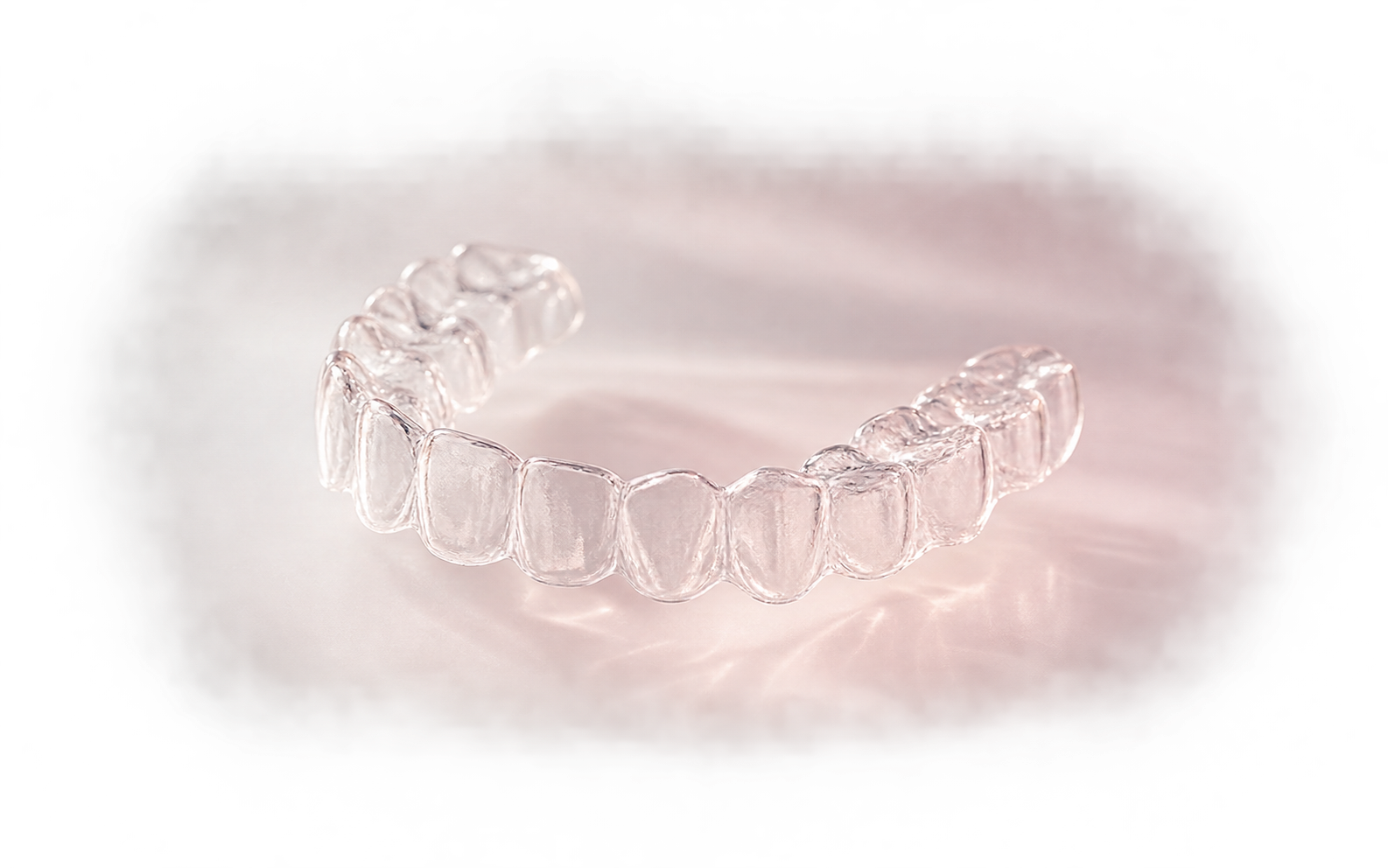
Aligners can be removed for eating, dental care and especially important events. They suit people who want to be completely free of appliances at times and avoid drawing attention to treatment.
Visit the aligners page
These answers provide guidance. The final choice of system, duration and treatment plan is made after in-person diagnostics.
The full cost includes braces placement and the orthodontic package. Metal braces cost ₽198,000 and sapphire braces ₽272,000. The treatment package costs ₽162,000–498,000, depending on complexity and duration. The dentist determines the exact option after diagnostics.
You pay for a predefined course of treatment rather than each adjustment separately. The price of the selected orthodontic package stays the same whether the dentist finishes earlier or treatment takes longer than estimated.
Local correction may take up to 12 months, and complex comprehensive treatment up to 36 months. Duration depends on tooth alignment, bite, bone and gum condition, required movements and tissue response.
Both systems can move teeth effectively. Metal braces are stronger, more compact and often more practical for active mechanics. Sapphire braces are more transparent and discreet in the smile. We choose after diagnostics, considering the clinical task and your aesthetic preferences.
Local treatment is sometimes possible, but the decision cannot be based only on the appearance of one dental arch. The upper and lower teeth need to meet correctly after movement, so the dentist first assesses the whole bite.
Not for everyone. Extraction is recommended only when indicated, such as when wisdom teeth obstruct planned movements, damage neighbouring teeth, become inflamed or create other risks. The decision is based on imaging and the orthodontic plan.
Yes. Orthodontic treatment has no upper age limit. Bone, gum and tooth condition and general health are more important. In adults, we carefully coordinate orthodontics with crowns, implants, periodontal care and future prosthetic restoration.
The retention stage begins to maintain the new tooth positions. Depending on the situation, the dentist uses fixed retainers, removable retainers or a combination, and schedules check-ups.
Placement is usually painless. After placement and some adjustments, teeth may be sensitive to pressure for a few days, and the oral tissues need time to adapt. The dentist explains how to reduce discomfort and care for the braces.
Neither method is best for everyone. Braces depend less on patient compliance and give the dentist extensive control over movement. Aligners are removable and less visible but require a strict wear schedule. The suitable appliance is chosen after diagnostics.
At your consultation, the orthodontist will assess your situation, explain treatment options and determine the diagnostics you need.
Get an orthodontic treatment plan Contraindications apply. A specialist consultation is required. The information and calculations are not a public offer.